Tuesday, August 7, 2012

In Mexico Sitting and Relaxing is Legal

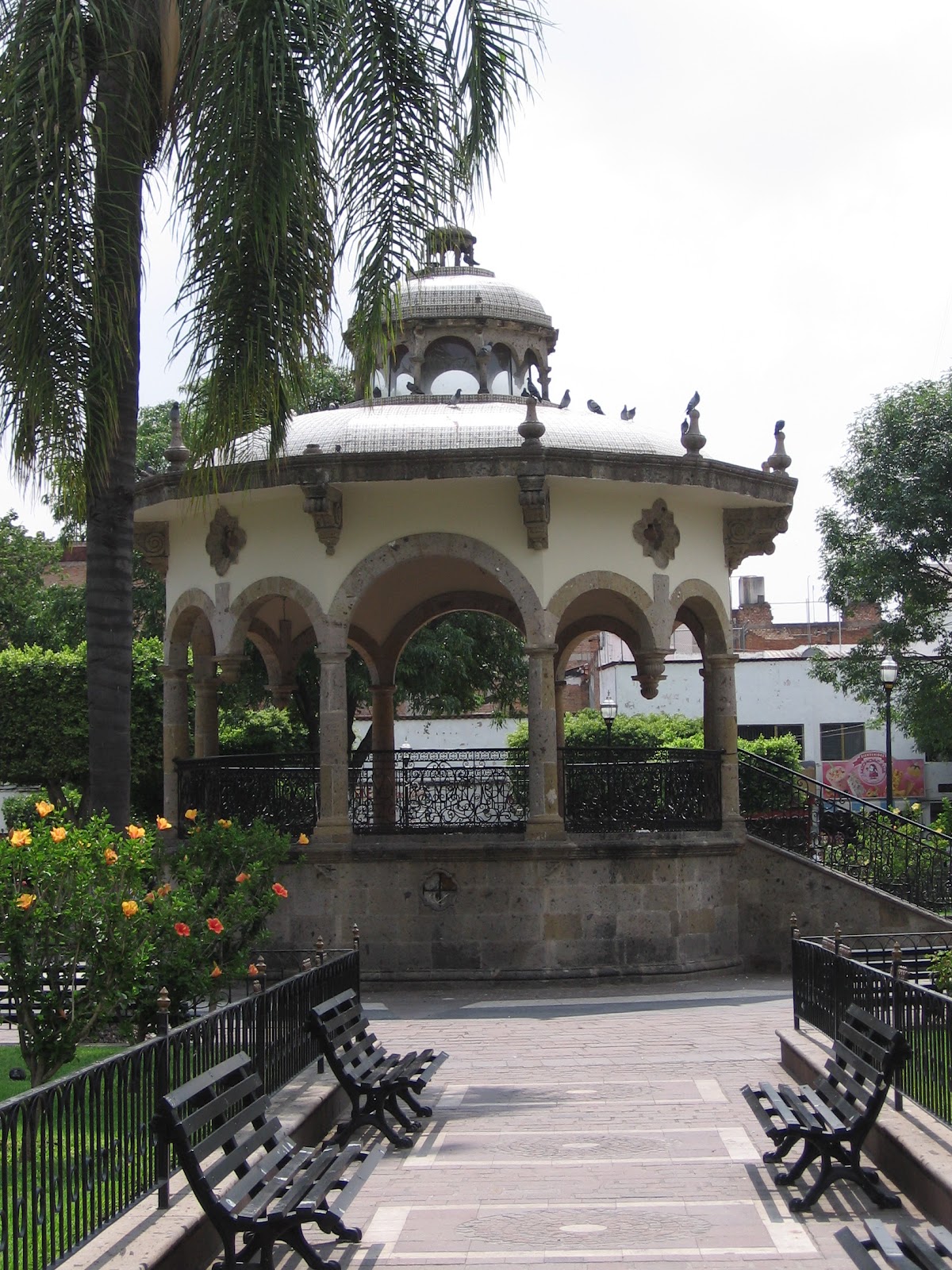
Plaza in Tlaquepaque
I came back to news of San Francisco's enforcement of the new sit/lie ordinance that makes hanging out on public sidewalks against the law. Not only is this not the case in Mexico, sitting and relaxing are actually encouraged in public spaces such as the beautiful old colonial-style plazas that grace almost every city and town.

There are benches everywhere, much like the ones that were removed from Civic Center Plaza in the mid-nineties when I worked at the nearby Public Library. Yes, in sleazier towns there are occasional scruffy guys or borrachos (drunks) but the night markets don't sell alcohol and the problem is nearly non-existent compared to this country.

Public spaces are for the people and they come alive at night with stands selling tacos, pozole, tamales, homemade potato chips, even hamburgers. The people are so friendly it made me a bit embarrassed for our country of rush and bother. I am trying to be more Mexican now in my new retired state. To me that means more conscious of others and more aware of myself as a member of a community that transcends ethnicity, race and gender identity.

Monday, August 6, 2012

Passing as a Man in the Guadalajara Bus Station...

 A Female Man in Guadalajara
Yes, there are queers in Mexico, one woman bus driver was butch as all get-out, but in general women tend toward ultra-femme. Gay men, of course, are more visible. This must be the reason that I was so often addressed as senor. Deb and I decided to make the best of it and try to pass as a heterosexual couple. It worked as long as I didn't speak. My voice is not exactly in the male range.

Thursday, July 12, 2012

On Vacation


                            Lavenderjoan is on vacation and will return to blog again in August.

Tuesday, July 10, 2012

Travel as Buddhist Practice

Ajijic Seen From Lake Chapala
I'm in the process of packing for 3 weeks of travel in Mexico with Deborah. Since I'm putting everything in a backpack that I have to carry, my decision are made almost exclusively by weight. It's a challenging prospect due to the fact that we will be at in a range of climates from 7,000 feet above sea (sunny and comfortably temperate) to absolute sea level which, in July, will be steaming. I'm taking lots of soap so I can wash and rewash the clothes that I'll be sick to death of by the end of the trip. 

Packing is one of the hardest things about travel. Once we leave, we will have next to nothing and will, judging by our past performance, get used to it. It will be as though we never had any other life but the one of motion. Travel is one of the few genuinely Buddhist experiences. You are in the moment because there is nowhere else to be. Taking in the world and meeting basic needs of food and shelter are the goals that take up all the available space. It is a freeing feeling.

When I was young, following the death of my mother in 1973, I took the money from her life insurance, a friend and we went to Europe to bum around indefinitely. Our venture, meant to last at least a year, ended in eight months, not because we ran out of money (hostels and train travel were dirt cheap then) but because, even at 23, we ran out of stamina and patience with nomadic life. In the long run, there is an isolating quality to observing other's lives from the outside.

But, in the short run, I am really looking forward to a few weeks of suspended reality. Especially because, as a newly retired person, I haven't yet defined the parameters of what that day to day reality will actually look like.

Wednesday, July 4, 2012

A Rapidly Warming World

Fires, soaring temperatures, fierce storms; we are now experiencing first-hand the effects of global warming, that some euphemistically term, climate change. To say many people are without power takes on a quite literal meaning. What will this mean for the future? The diminishing population of endangered insects, like honey-bees, will mean that plants that rely on pollination will not produce fruit.

Other factors will impact the food supply. New wetland and marsh in once fertile fields and drought in once temperate areas will not bode well for feeding the population of the future.

It's a scary prospect because we can't expatriate from the earth as easily as we can from an individual country. Can and will industrialized countries commodify the universe? WalMart is probably laying the foundation for WalMars as we speak. For all we know, the one percent may be working on a Titanic-sized space station with condos aboard as Newt Gingrich plans for life on the moon.

How will this all play out? Will the entire exercise of politics become superfluous and unnecessary. It all remains to be seen but, indisputably, we do live in challenging times.

Wednesday, June 27, 2012

The "Empire of Consumption"

I saw Chris Hedges speak last night and the "empire of consumption" was the phrase he used to refer to what this society has become.Was it always this apparent or have things changed drastically? The commercialization of society has never seemed more obvious and obnoxious than it is today. He observes that it is a progression that has happened over time.But this out-of control growth was years in the making and, like any malignant tumor, it will destroy the host organism.

Of course, for many years the Gay Pride Parade has been used as a vehicle for advertising, some of its biggest sponsors being alcohol companies. This is not subtle irony. The fact that alcoholism is a big problem in the LGBT community only makes the strategy more blatant and obscene. What a fertile field for new consumers! And what a sad commentary on queer liberation for those of us who remember the early marches to the aptly named, Marx Meadow in Golden Gate Park.

Materialism and privatization are the mantras of the 21st century. An Ayn Rand-style, libertarian world is barreling down upon us inch by inch. It is one where the corporations and the 1% are in the driver's seat and the rest of us are under the wheels. No sector is immune. The final steps involve the destruction of labor unions so that workers are easily exploitable, cheap and plentiful. The education system is being replaced by a network of charter schools where teachers are expendable and students, taught to perform like trained seals on exams but not to employ critical thinking skills, must pay to attend. Libraries, hospitals, the postal service and prisons are all being targeted for privatization in the new survival of the wealthiest economy.

Chain stores and chain restaurants are rapidly replacing the mom 'n pop genre. The internet provides competition for almost every market excepting only those like food, medical care and hairdressing. The trades that require the physical presence of our bodies. Everything else is up for grabs. 

Monday, June 18, 2012

Is Resentment of Privilege Inevitable?

Where the Rubber
Hits the Road
Now that our society seems to have fully incorporated the one percent/ninety-nine percent concept into our socioeconomic discourse, right-wing conservatives are busy impugning that all this negative attention the one percent are receiving is simply the jealousy and resentment of the "deservedly" unsuccessful, or less successful, underclass.

With all their money behind them, they are getting some traction with this approach. As for myself, in my sixth decade, I am trying to make peace with my life decisions, opportunities and lack thereof. Lately I've been thinking a lot about whether or not my political positions are motivated by these types of unsavory and destructive emotions.

Just this past Friday, my partner and I went to see a couple of films at the San Francisco LGBT Film Festival that were on the subject of specific lesbians of our generation who achieved recognition in progressive politics. One film was about Charlotte Bunch who started out in the seventies as a lesbian feminist activist and wound up a career academic (without advanced degrees) who worked with international organizations advancing women's rights in mostly third world settings.

The second film was about Ellen Ratner, someone whose work I was not familiar with. She is a liberal radio broadcaster (she claims the only one) for the rabidly conservative Fox network. Ratner is my age and actually attended the same junior high and high school that I did although I never spoke with her. She inhabited a wealthy world that did not intersect with mine in any way (neighborhood, friendship circles, activities, interests).

This documentary, "Ellen Ratner: "A Force of Nature," was produced by Barbara Kopple filmmaker of "Harlan County, USA," the award-winning chronicle of a coal miners' strike in a rural Appalachian town. Clearly, this film was a challenge for Koppel. Unlike the Kentucky coal miners, Ratner is an heiress from a real estate dynasty. (this information is from other research, it is not in the film). I understand that in these times particularly, depicting an eccentric, essentially kind-hearted, but massively privileged, liberal who made good is not easy. None of her homes or living arrangements were shown. The segment of Ratner, a boss in her workplace, trying to get a black woman underling to say she liked Ellen as a person, made me cringe. But more safely, Koppel filmed Ratner almost exclusively on a philanthropic mission in Africa. The only outright allusion to the wealth of her family was the fact that she bought her wife, a former Air Force pilot, her own airplane as a gift. It was a sweet gesture but certainly not one that many other folks could duplicate.

So am I resentful of people, even those who are speaking up for lesbian rights, who have benefitted from so much more opportunity and privilege? And, if I am, is that wrong? I am aware that when I am feeling good about myself and my life, my negative feelings toward others disappear. As a nominal Buddhist, I know not only that those feelings are counterproductive, but also that having access to money and things doesn't necessarily make a person happy. On the other hand,  not having any access, i.e.: living on the street and starving, can truly make a person miserable. To some degree, I also believe, even though this sounds really corny, that experiencing struggle tends to build character and resourcefulness.

I do often wonder who I would have been and what I could have done if I'd come from a background where financial stress did not play such a starring role. But truly, that's as hard to imagine as who I'd be if I'd been born African-American, straight or even gentile. I'm not sure of what that person would have been like, only that she (or he) would have been someone else.

So, do I covet Ellen Ratner's cushy life and experience? Absolutely not! Do I resent people who have had access to more power, privilege and opportunity? Well, not in theory, but my honest final answer would have to be that it depends on which moment you ask me.